Books
Books by Vadim Sokolov and coauthors. Each book is free to read as a PDF, and its source and code are on GitHub.
Computing the Riemann Hypothesis, Volume I Representations of Xi, Thorin Measures and the Reciprocal Xi Function
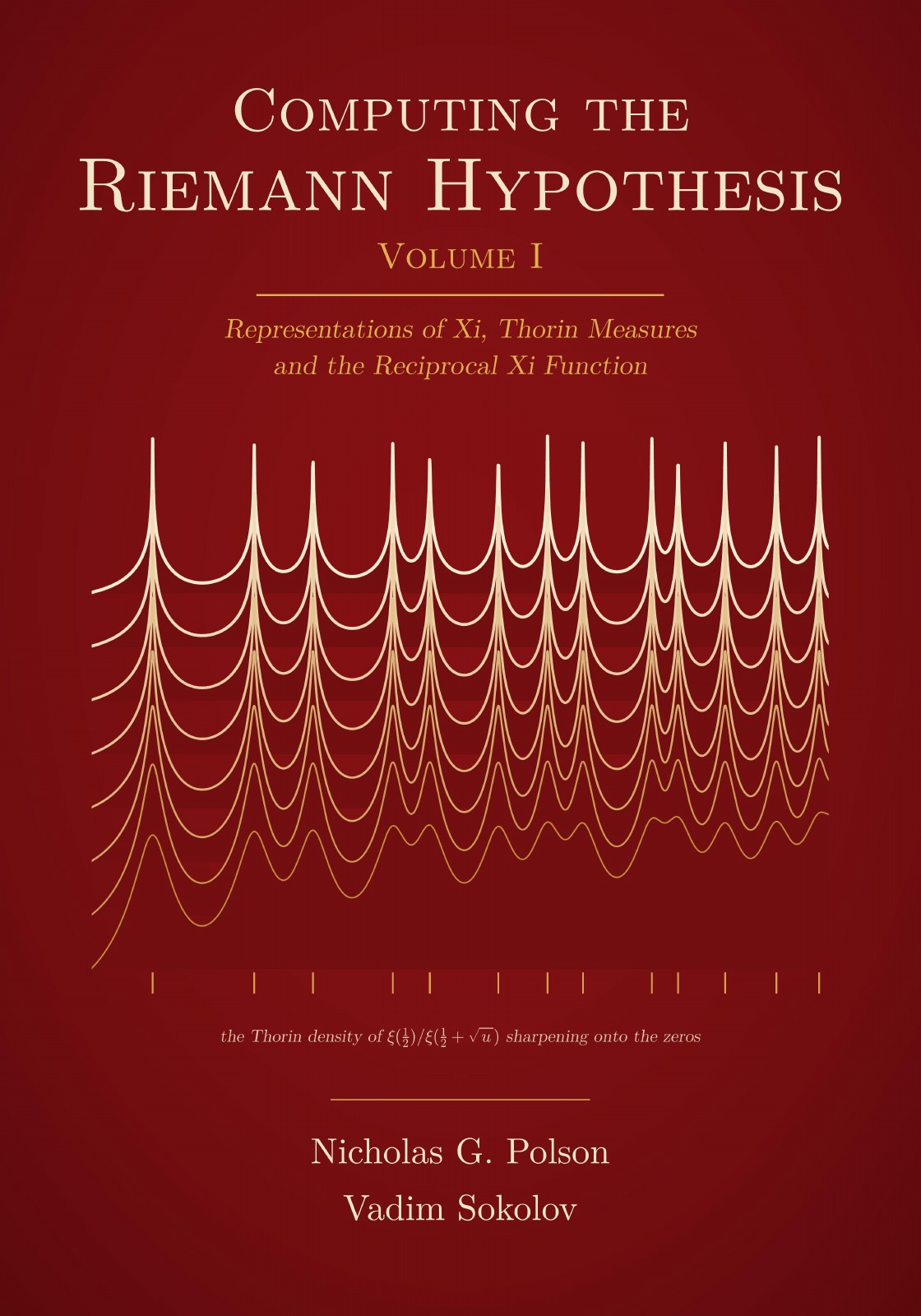 Nicholas G. Polson and Vadim Sokolov. 2026. Edition 2.
The theory: representations of Riemann’s Xi function, the Thorin measure whose positivity is equivalent to the Riemann Hypothesis, and the reciprocal Xi function as a generalised gamma convolution.



Computing the Riemann Hypothesis, Volume II Cauchy Deconvolution and Certified Computation
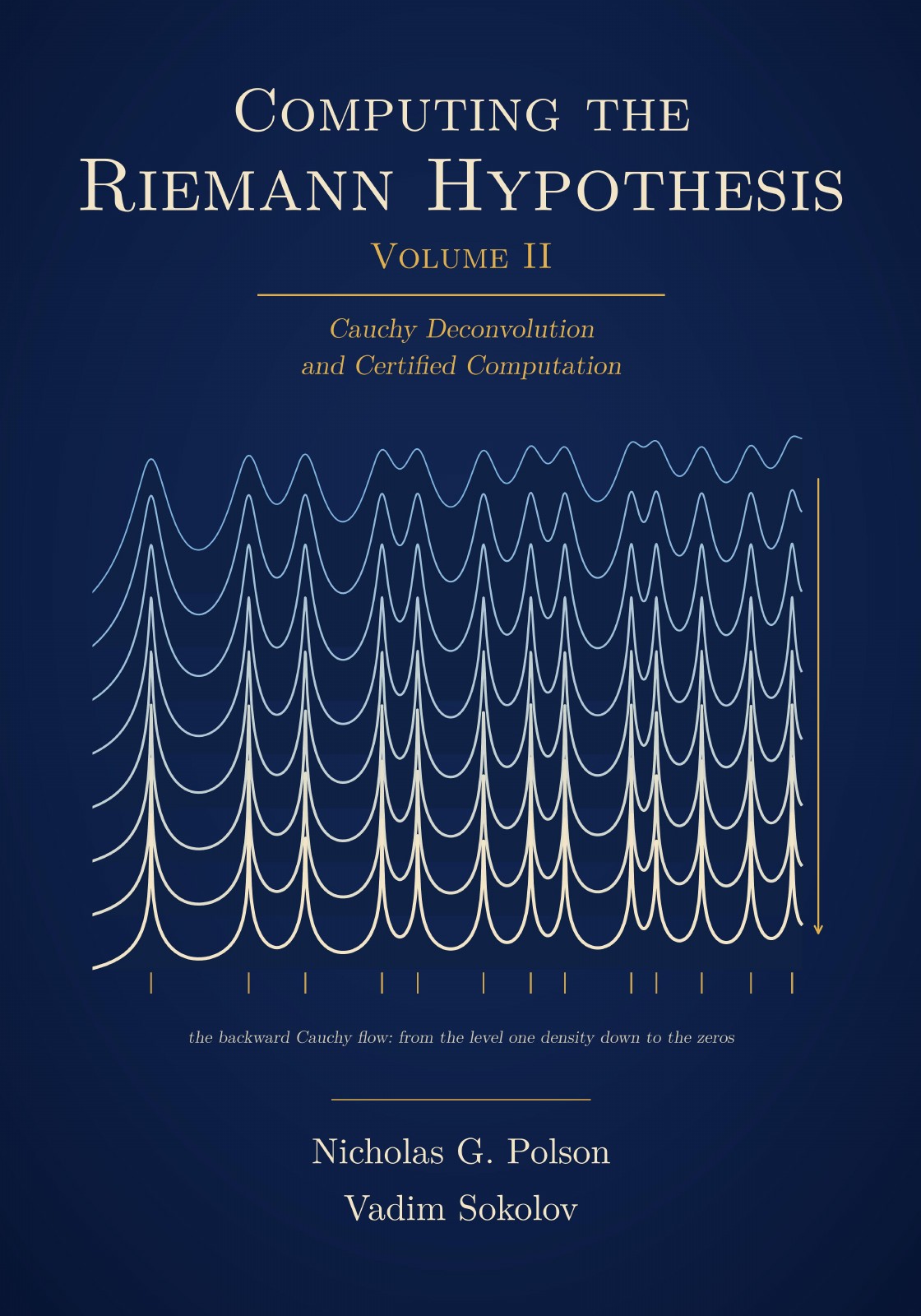 Nicholas G. Polson and Vadim Sokolov. 2026. Edition 2.
The computations: Riemann’s Xi function in ball arithmetic, the Thorin measure at finite resolution, Cauchy deconvolution, the de Bruijn Newman flow, the barrier method and the Thorin phase diagram.

Computing the Riemann Hypothesis, Volume III Is There a Path? Routes to RH from the Thorin Programme
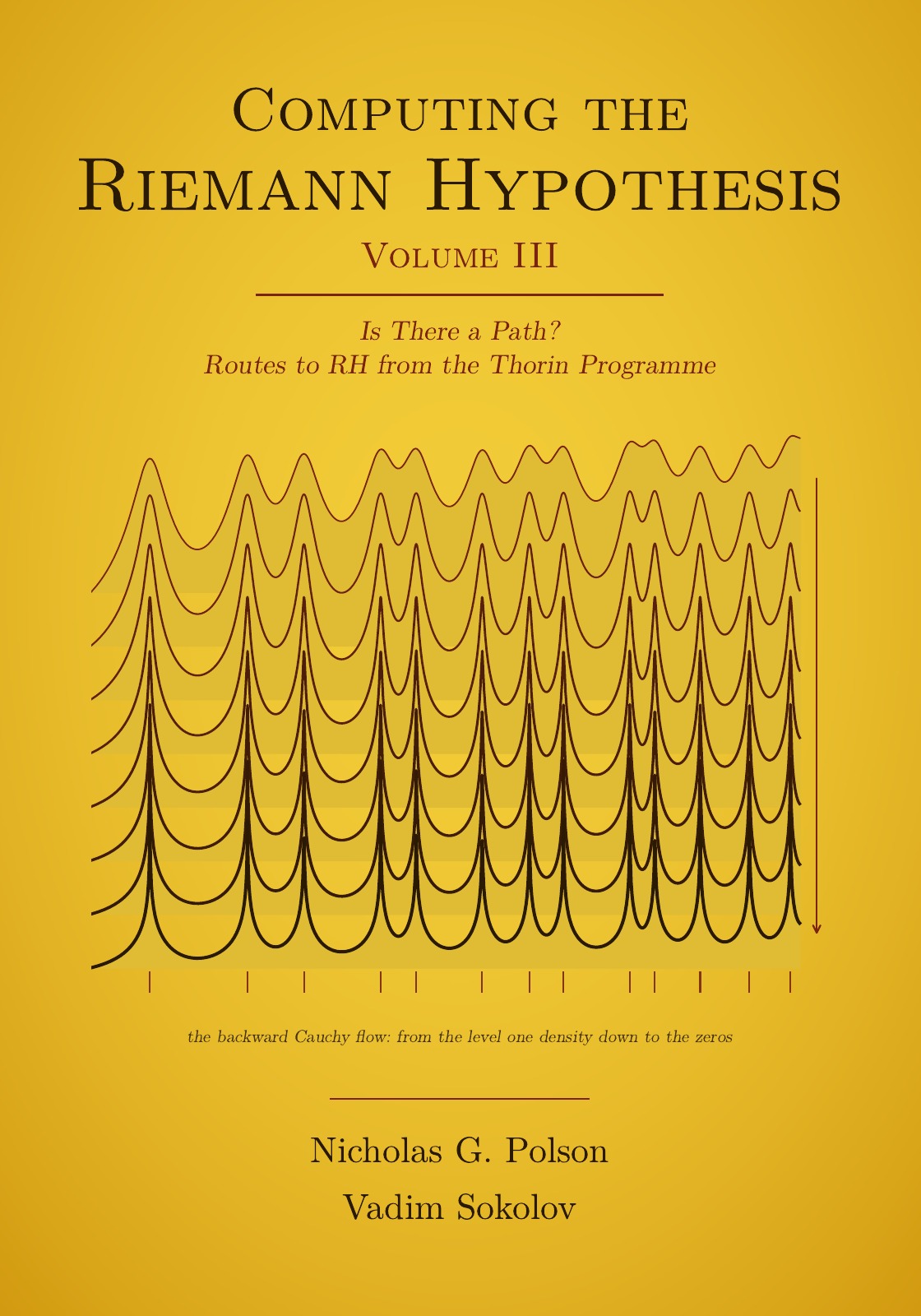 Nicholas G. Polson and Vadim Sokolov. 2026. Edition 2.
The assessment: the routes from the Thorin programme to the Riemann Hypothesis, the filters that test them, and what is proved and what is open after the zero free half plane Re s > 7/8.

Bayesian Clinical Trials
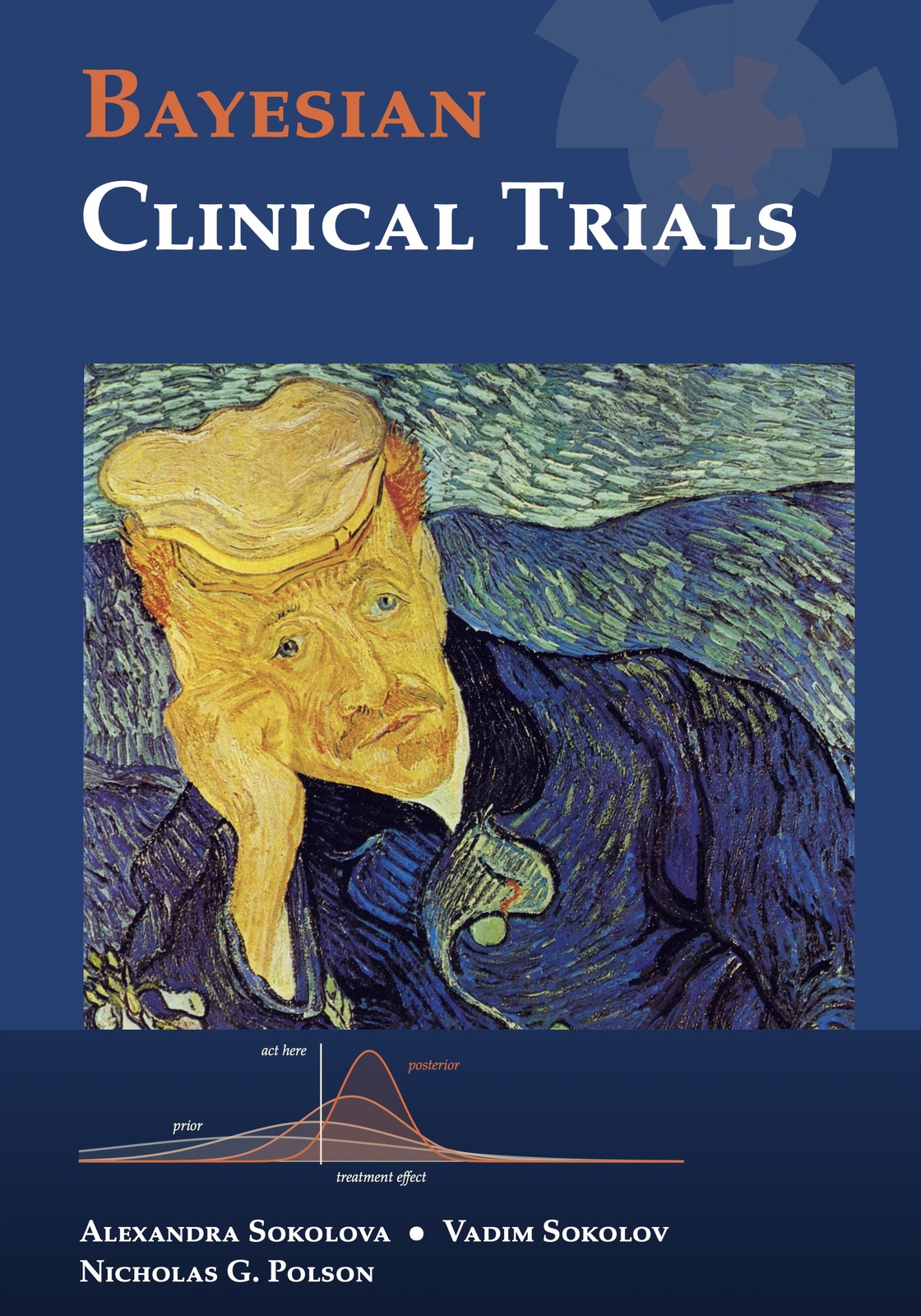 Alexandra Sokolova, Vadim Sokolov and Nicholas G. Polson. 2026. Edition 1.
Bayesian clinical trials built up from the traditional trial and tied to regulation: calibration, monitoring, safety, borrowing, adaptive designs, and reanalyses of landmark trials, with an R package and an online lab.


Bayes and Law Evidence, Expected Utility and Machines in the Courtroom
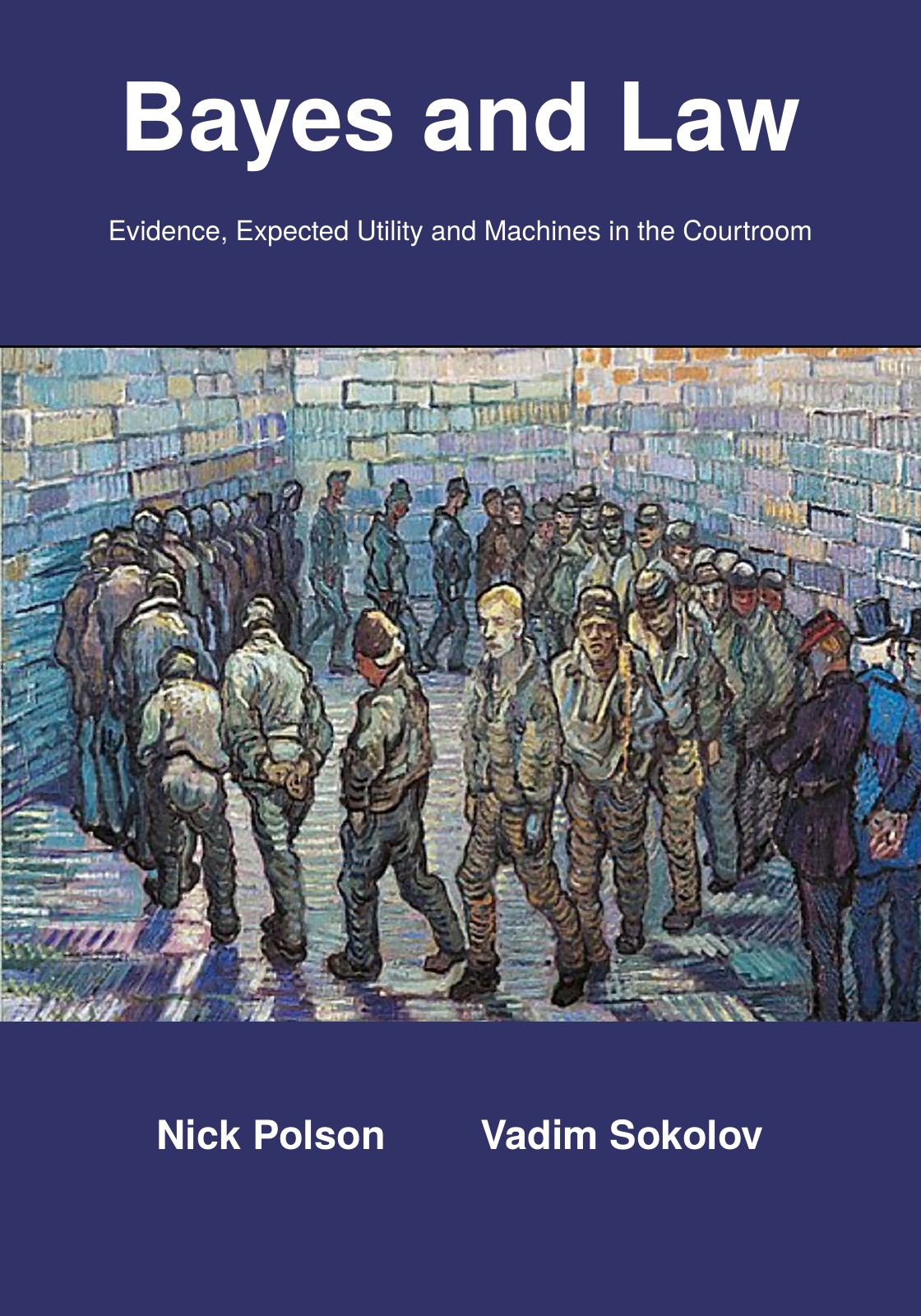 Nick Polson and Vadim Sokolov. 2026. Edition 1.
A casebook for law students on reasoning under uncertainty: priors, likelihood ratios, standards of proof as decision thresholds, the classic fallacies, and the statistics, economics and machines that now enter the courtroom, taught through leading English, American and comparative cases.

On the Collatz Conjecture Martingales, Momentum and Continued Fractions
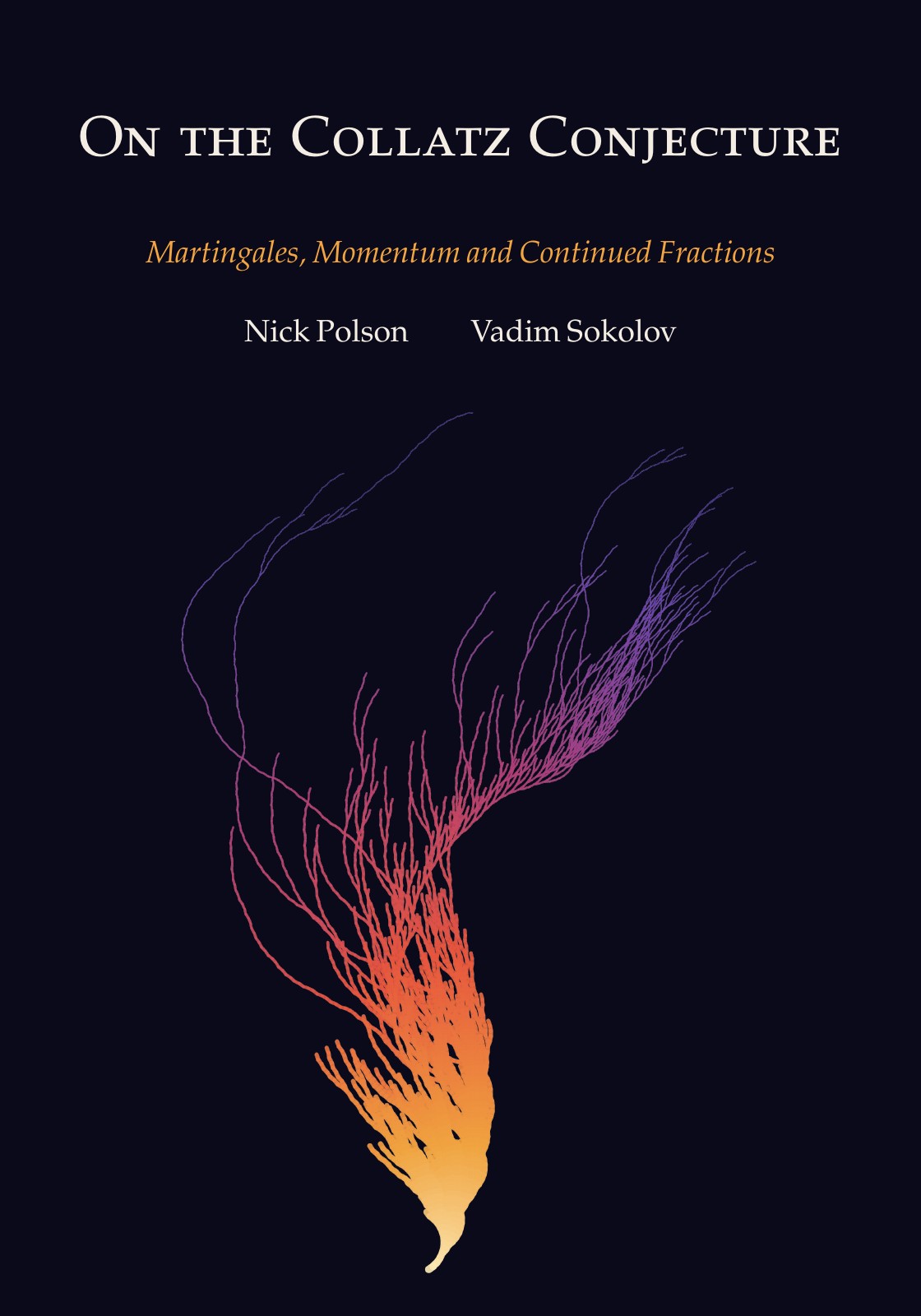 Nick Polson and Vadim Sokolov. 2026. Edition 1.
Why the Collatz (3x+1) conjecture resists proof: the map as a random walk, an optimizer and a Diophantine problem; proofs that fixed horizon monotone Lyapunov certificates and finite residue sieves cannot settle it and the cycle inequality cannot exclude all cycles; a momentum method from log2 3.

Elements of Bayes and Information Theory A Predictive Theory of Inference: Information, Algorithms, and Large Deviations
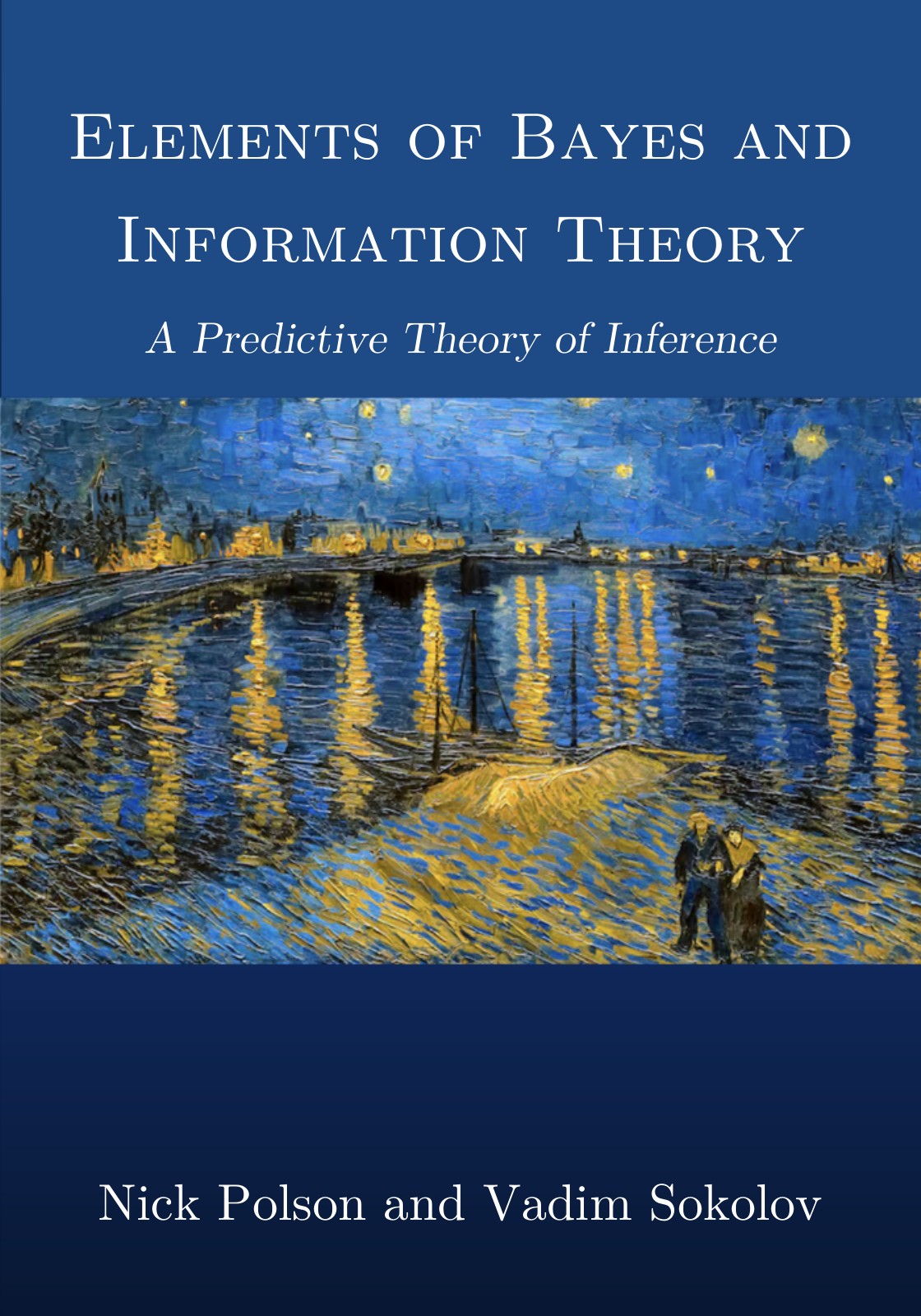 Nick Polson and Vadim Sokolov. 2026. Edition 1.
A Bayesian statistics monograph built on de Finetti, Sanov and Bayes: exchangeable prediction under moment constraints gives maximum entropy laws, and testing, shrinkage, asymptotics and decision are read on one moderate deviation scale.

Bayes, AI and Deep Learning Foundations of Data Science
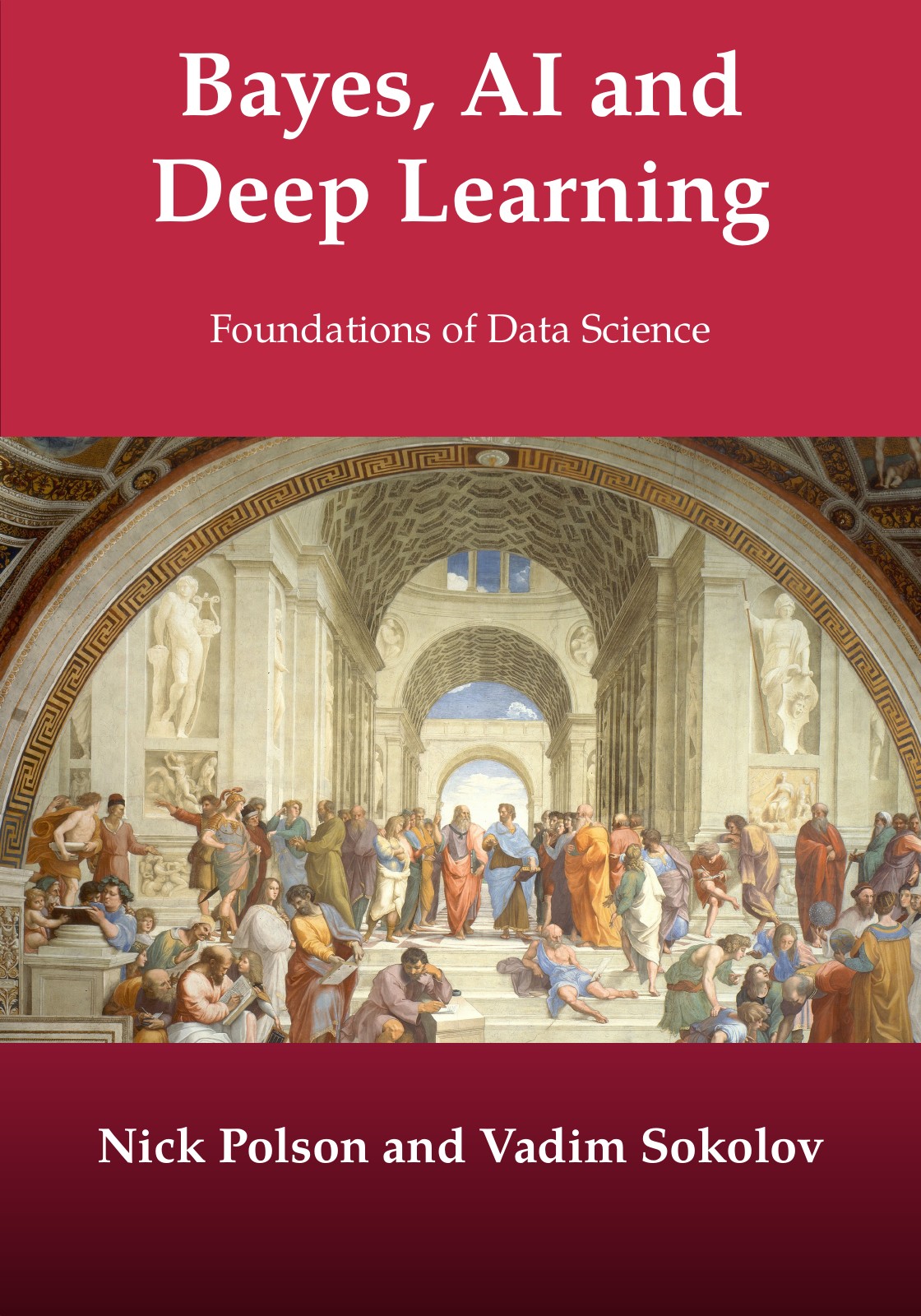 Nick Polson and Vadim Sokolov. 2026. Edition 1.
A textbook that develops Bayesian reasoning, statistical learning and deep learning as one probabilistic framework, from Bayes’ rule and decision theory to neural networks, transformers and AI agents, with code in R and Python.

Bayesian Causality Models, Accounting and the Bayesian Alternative to Double Machine Learning
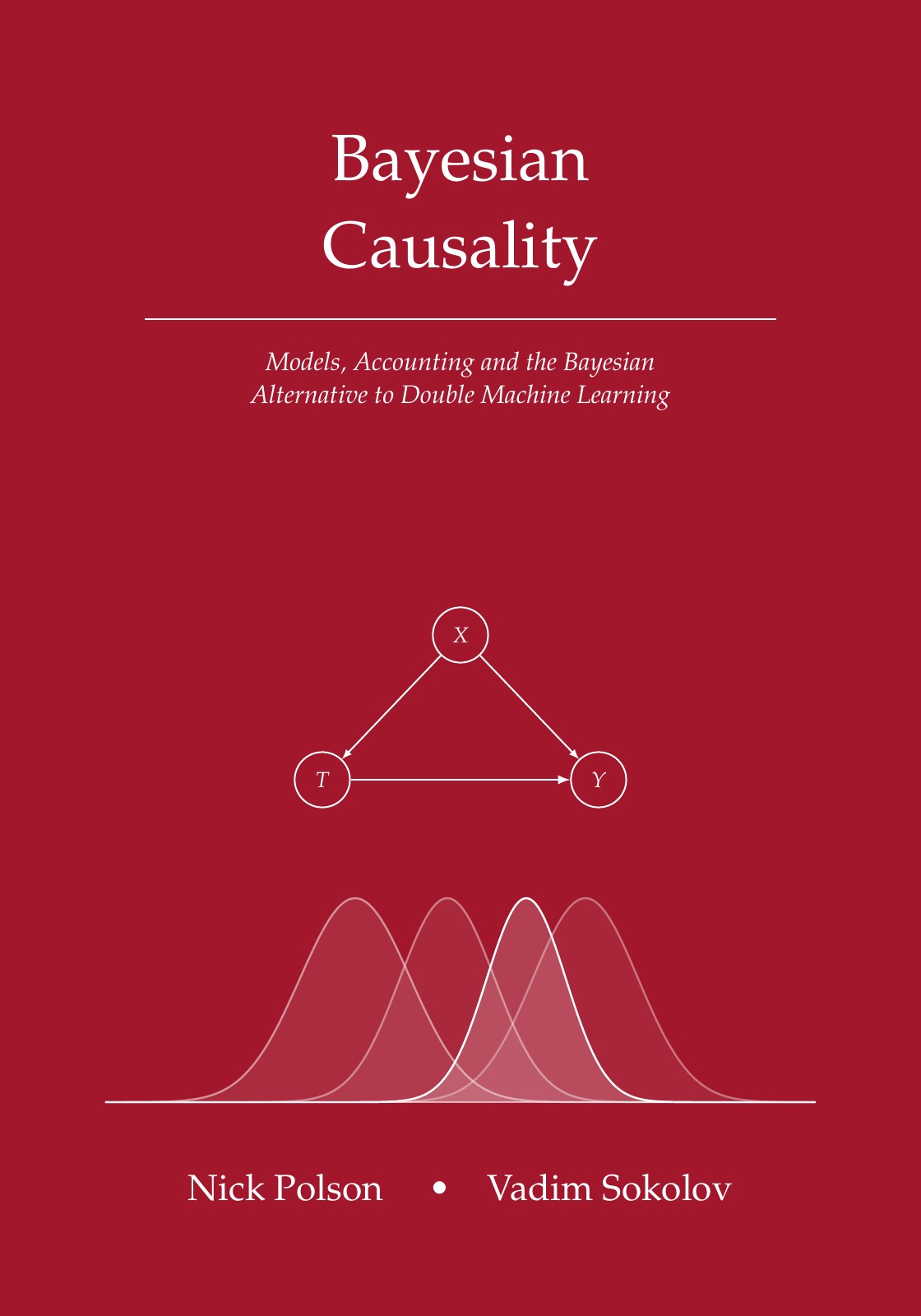 Nick Polson and Vadim Sokolov. 2026. Edition 1.
A textbook that builds one Bayesian model of outcomes given treatment and covariates and reads every causal quantity from its posterior, and compares it with double machine learning in simulations and in the 401(k), LaLonde and NHEFS data.

Clinical Trials in Practice From Foundations to AI Agents
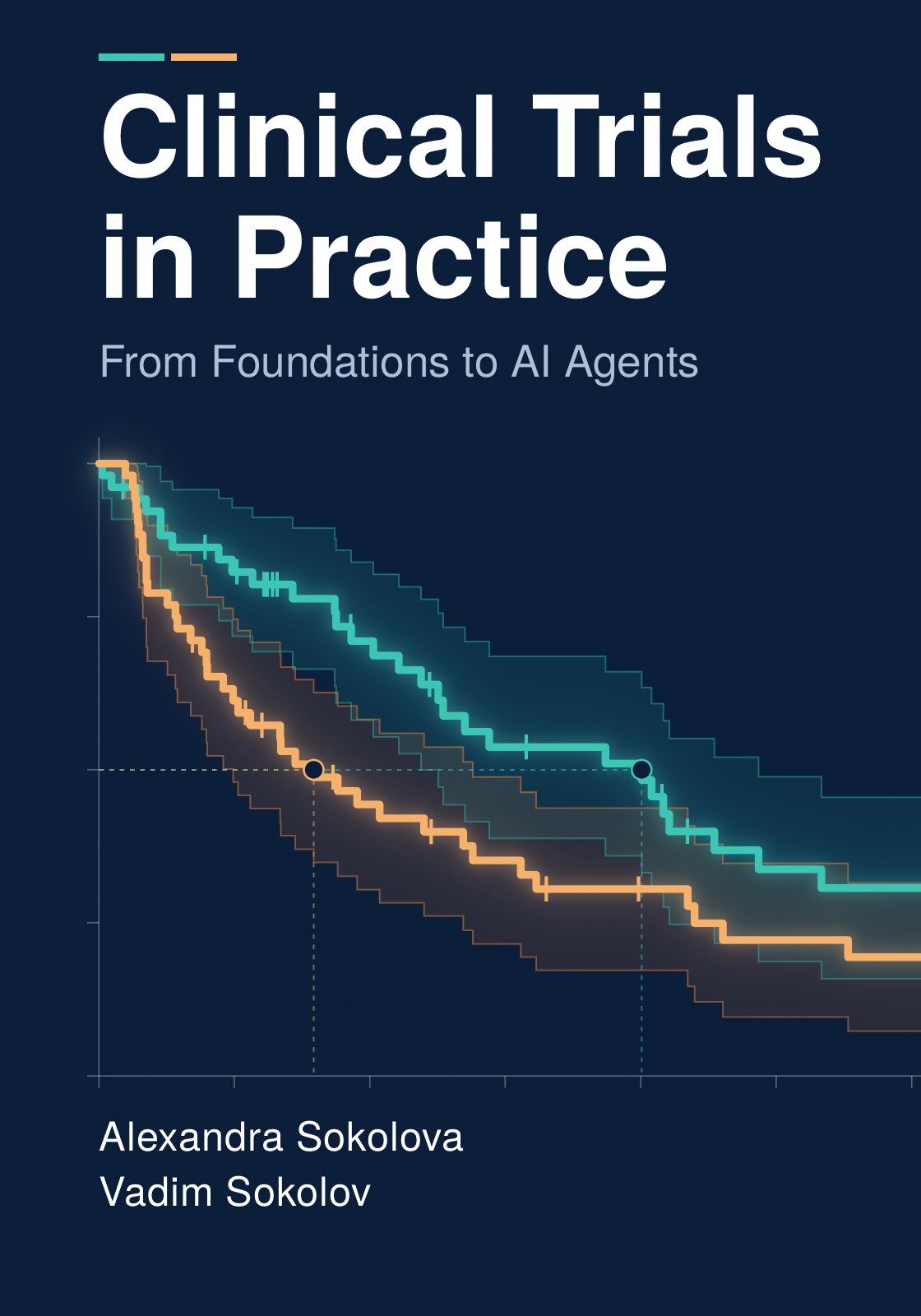 Alexandra Sokolova and Vadim Sokolov. 2026. Edition 1.
Clinical trials as science and as regulated operations: design and statistics, the daily work of a Phase III study from site selection to the trial master file, regulatory submission, and what AI agents may and may not do in regulated research.

On Langlands Conjectures Probabilistic Methods
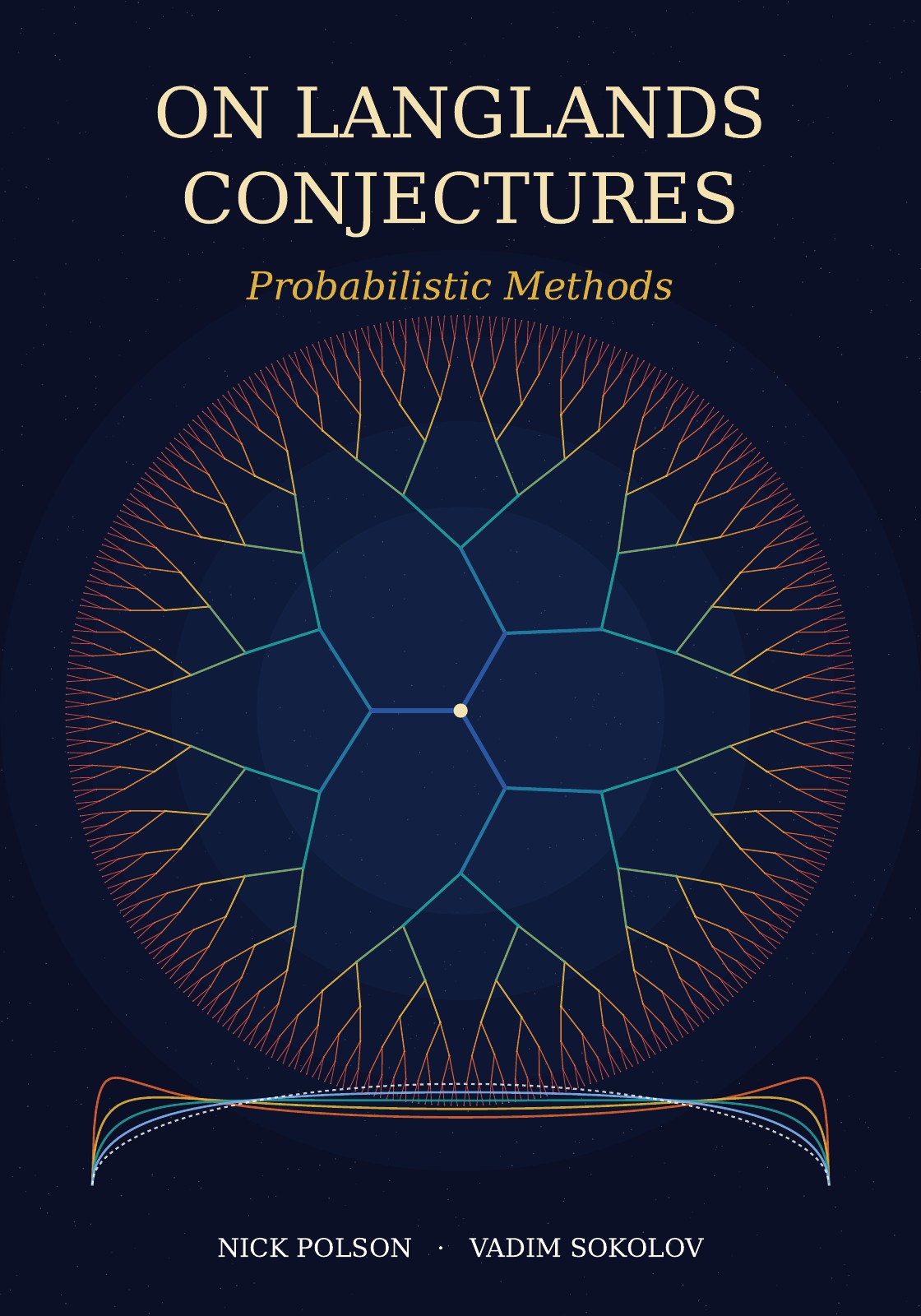 Nick Polson and Vadim Sokolov. 2026. Edition 1.
What probability can and cannot contribute to the Langlands programme: Sato Tate laws, random walks on trees and isogeny graphs, Thorin measures and generalized gamma convolutions as reformulations of the Riemann hypothesis, and Bayesian identification of Sato Tate groups, with code and data.

On Hilbert’s 6th Problem Probability, Mechanics and Bayesian Computation
 Nick Polson and Vadim Sokolov. 2026. Edition 1.
Hilbert’s sixth problem from Kolmogorov’s axioms and the Boltzmann equation to the Navier Stokes equations, and the inverse passage: Bayesian estimation on the solution manifold of a differential equation, where the adjoint evolution of the data is a sufficient statistic for linear equations.

P = RP A Monte Carlo Program for P versus NP
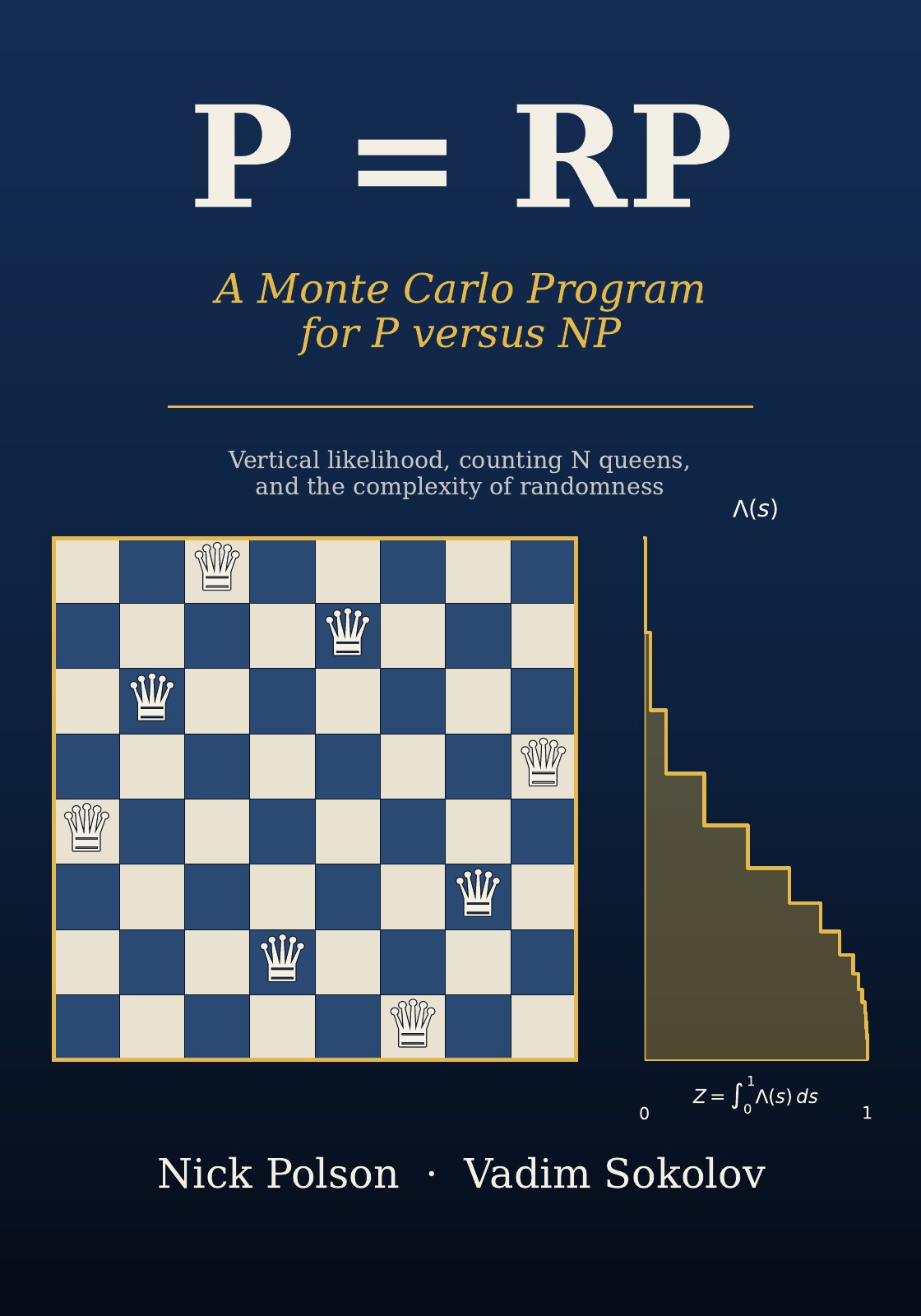 Nick Polson and Vadim Sokolov. 2026. Edition 1.
N queens counting as a rare event and a quantile integral, turned into a Monte Carlo program for P versus NP: NP = RP is shown equivalent to sampling queens completions, promise RP = promise P, which implies P = RP, is restated as a hitting set problem, with exact computations on the queens.

On Statistical Methods for Genetics Fisher, Ewens and the Bayesian Programme
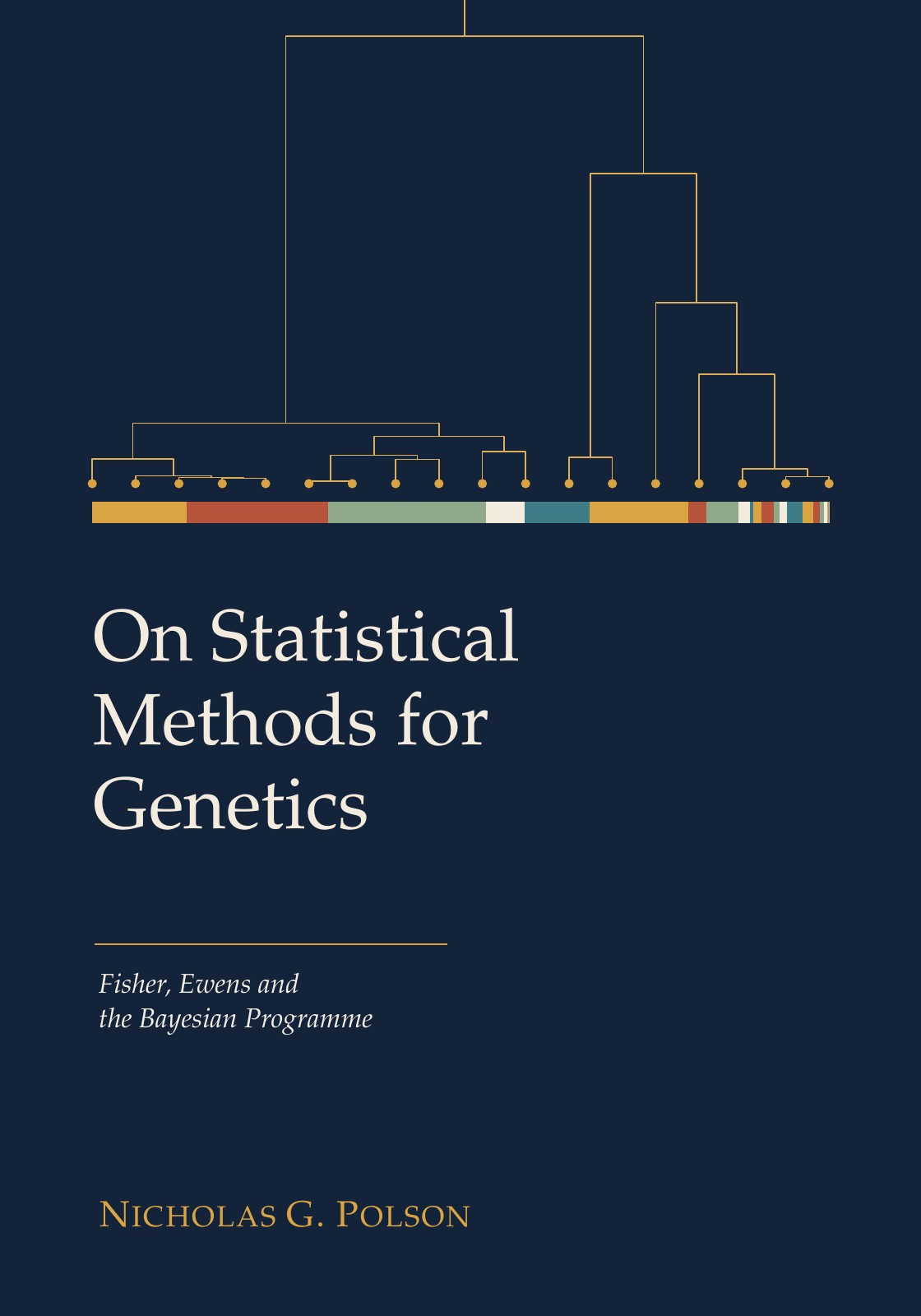 Nicholas G. Polson. 2026. Edition 1.
Statistical theory of population genetics: an exact form of Fisher’s Fundamental Theorem, shrinkage estimates of the rate of adaptation, the Ewens sampling formula and its rigidity, rational conjugacy, and sufficiency for learned coalescent inference.
